Dried Chillies
Whole dried chillies, flakes, powder and segments — heat-focused chilli products milled from Chinese chilli varieties across the full heat spectrum (about 10,000 to 70,000+ SHU). We grow, dry, grade and mill under ISO 9001 & HACCP, and supply food manufacturers across Europe, the Middle East and North America.
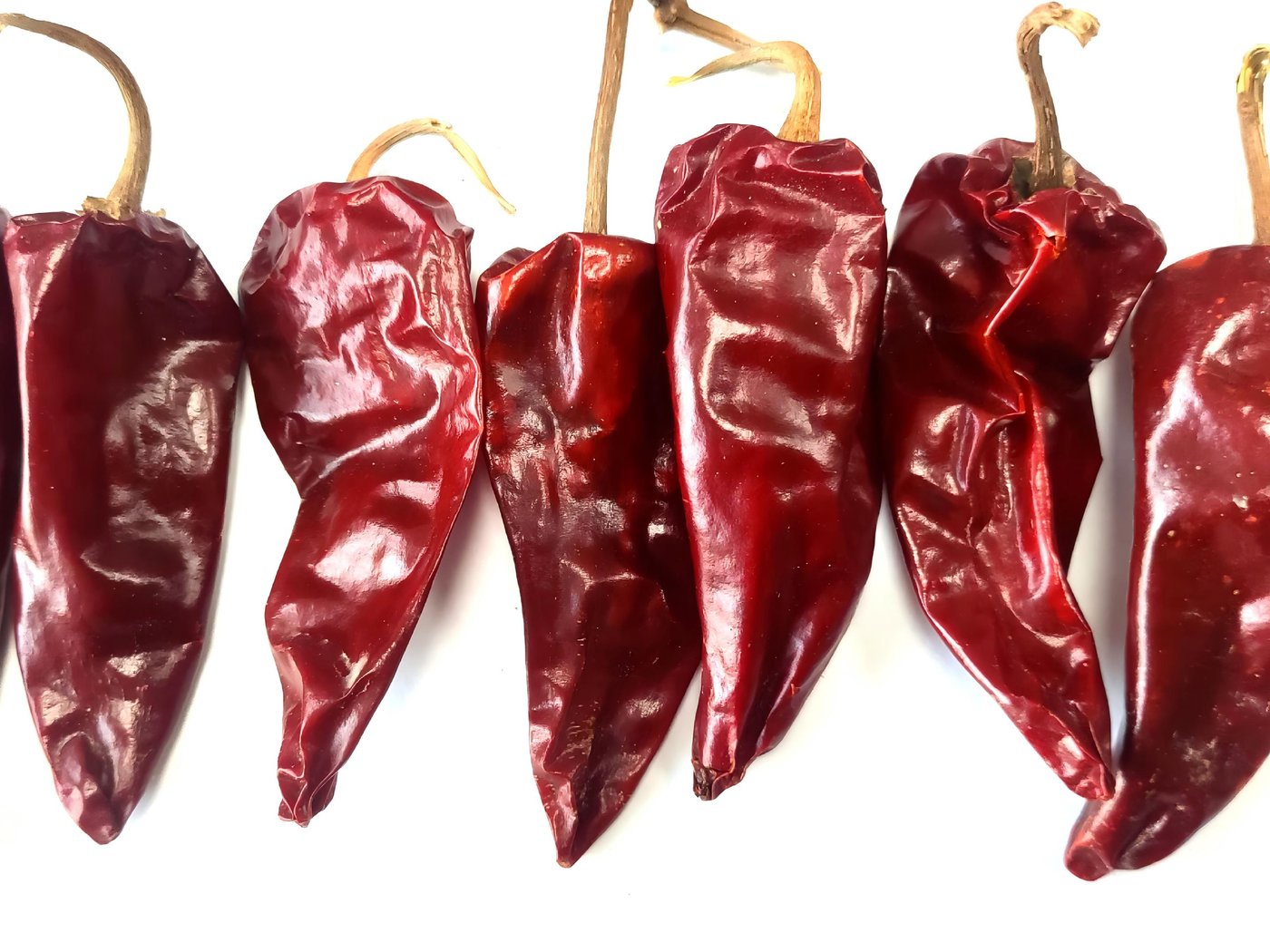
What dried chilli products does Tenda Peppers supply?
We supply the same crop in four processed forms, each matched to a different part of the food industry. The form you choose is driven by how the chilli must read in your finished product — visible pieces, texture, or a uniform heat release.
| Product form | Heat (SHU) | Varieties | Best for |
|---|---|---|---|
| Whole Dried Chillies | 10,000 – 50,000+ | Lantern, Jinta, facing-heaven, Xiaomi, Zidantou | Food service, hot-pot, visible chilli |
| Chilli Flakes (Crushed) | 10,000 – 20,000 | Xian pepper, Jinta, Erjingtiao | Pizza topping, seasoning blends, snacks |
| Chilli Powder | 20,000 – 50,000 | Sanying, Zidantou, New Generation, Seven-Star | Hot sauces, seasoning, industrial food |
| Chilli Segments | >50,000 | Jixin, Xiaomi, Chilli King, Shuan Shuan | Extreme heat, Sichuan-style dishes |
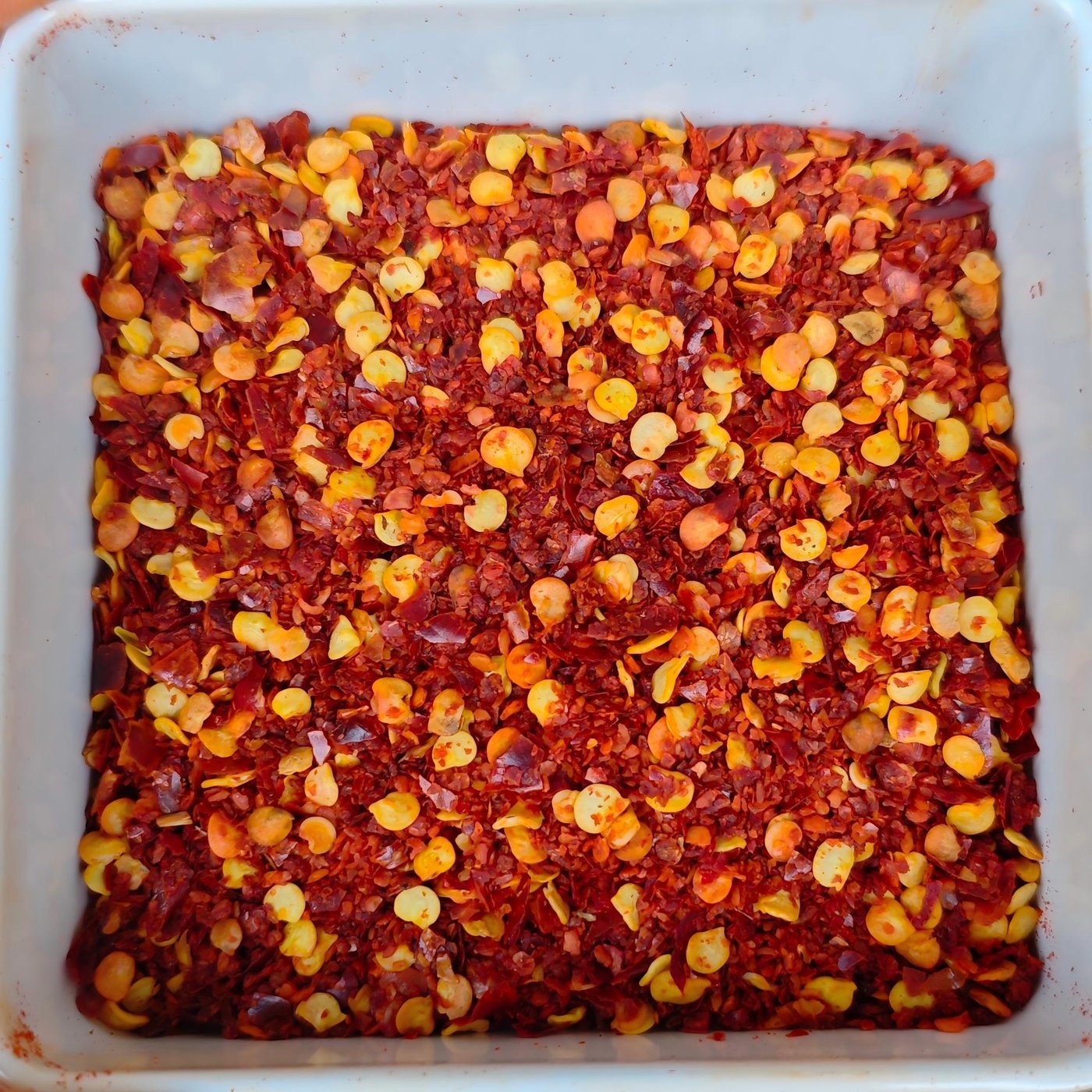
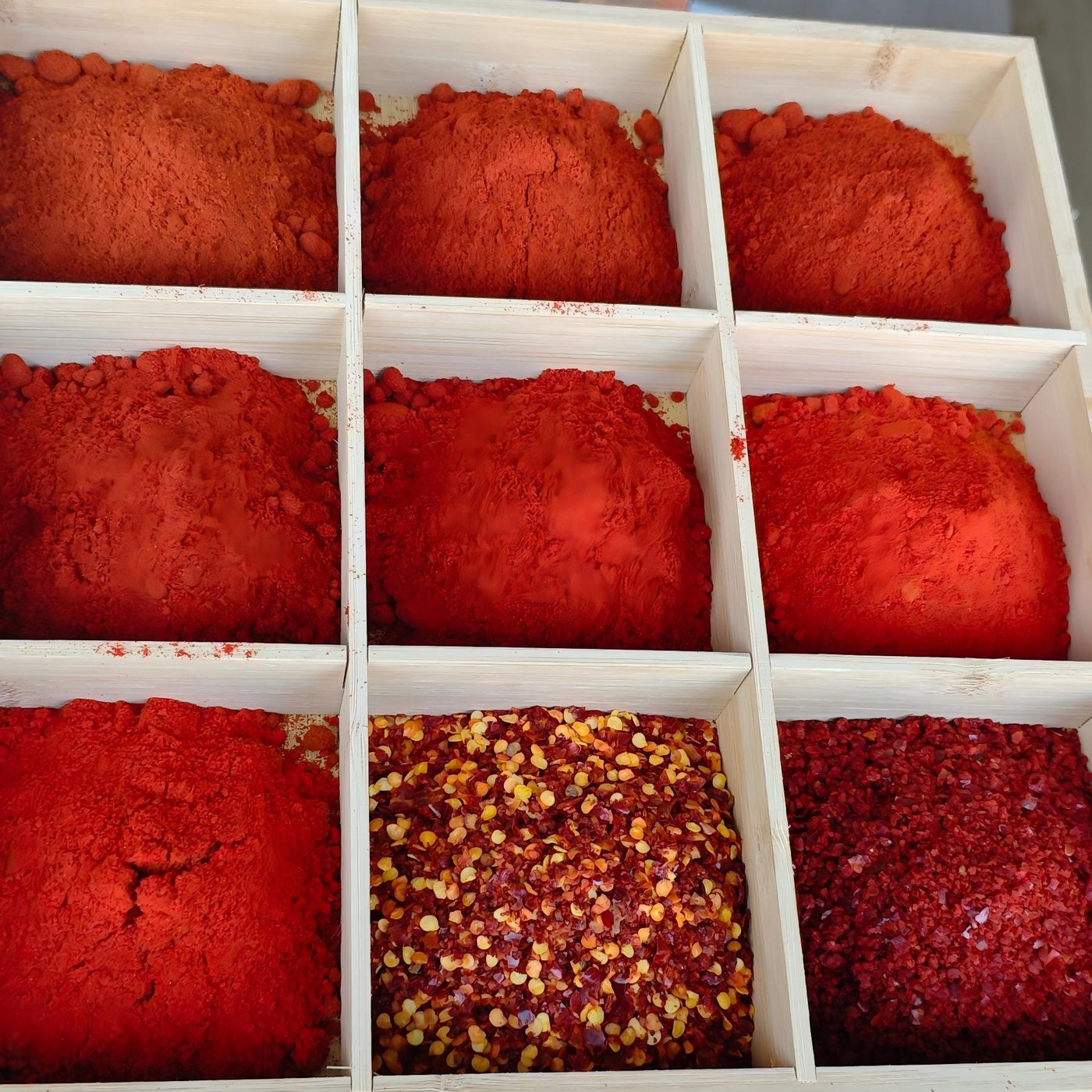
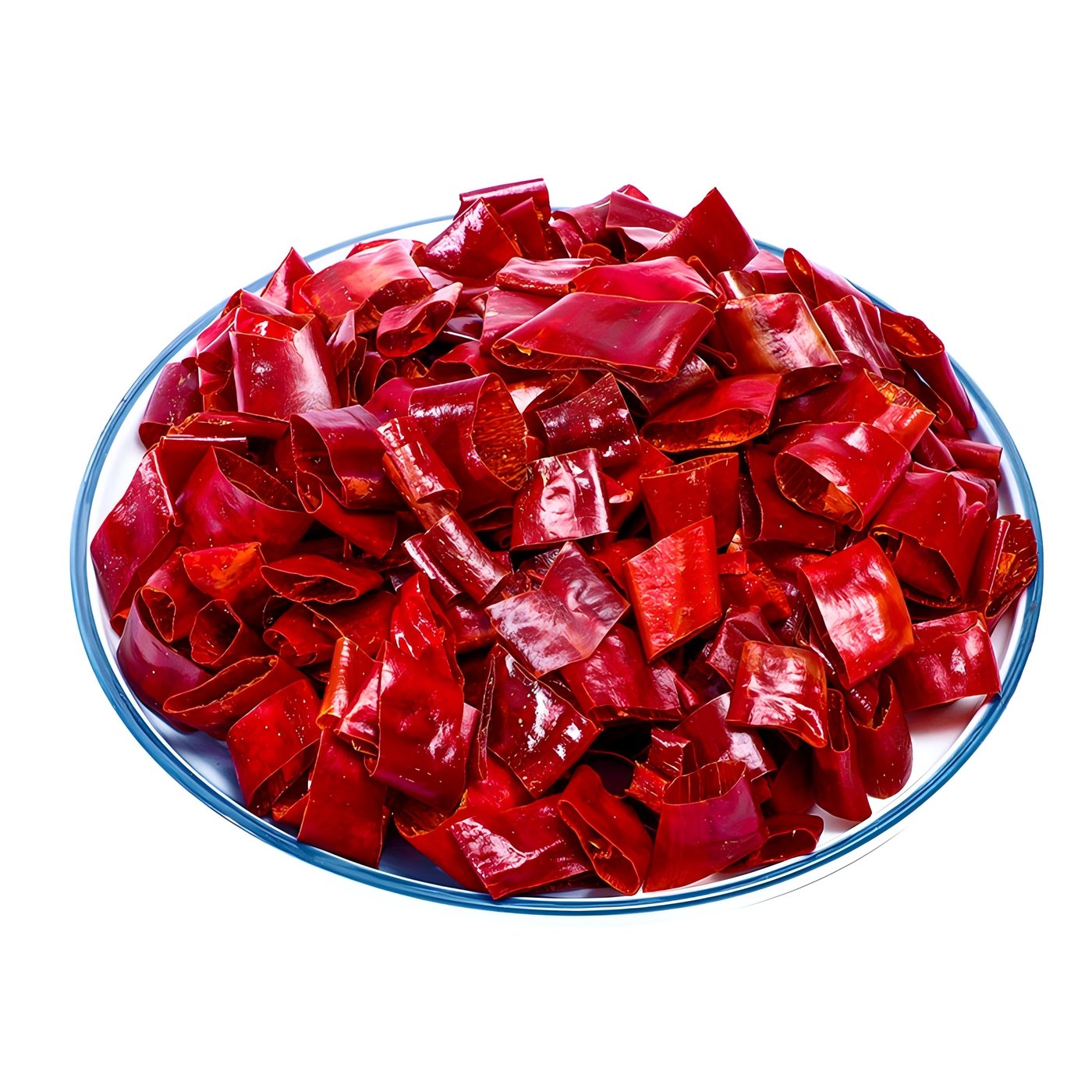
How hot are Chinese dried chillies?
Chinese chillies span almost the entire usable heat range — from sweet colour peppers under 500 SHU up to extra-hot varieties over 70,000 SHU. Dried chillies for heat sit in four bands:
| Heat band | SHU range | Representative varieties | Typical use |
|---|---|---|---|
| Low heat | <10,000 | Yidu red, Wangdu | Marinades, mild flakes |
| Medium heat | 10,000 – 20,000 | Xian pepper, Jinta, Erjingtiao | Seasoning, chilli paste |
| High heat | 20,000 – 50,000 | Sanying, Zidantou, Seven-Star | Hot sauce, snack seasoning |
| Extra hot | >50,000 | Jixin, Xiaomi, Chilli King | Extreme heat, chilli oil |
Heat is non-linear: a small amount of extra-hot chilli (50,000+ SHU) moves a blend's heat far more than the same weight of medium chilli. That is why specifying a precise SHU window — not just "hot" or "medium" — is what keeps a sauce or seasoning consistent batch to batch.
Browse by heat level: Medium · High · Extra Hot
Which chilli variety should I specify?
Variety is the first decision, because heat, colour and aroma are set by the variety and the ripening climate — and they vary independently. A complete specification names the variety (or a precise SHU window), not just "chilli powder".
- For hot sauce and snack seasoning — Sanying (Tianying), Zidantou, Seven-Star (20,000–50,000 SHU)
- For extreme heat and chilli oil — Jixin (50,000–70,000 SHU), Xiaomi, Chilli King
- For flakes and pizza topping — Xian pepper, Jinta, Erjingtiao (10,000–20,000 SHU)
- For visible whole chilli — Lantern, facing-heaven, Jinta
The full variety map — region, fruit shape and harvest timing — is in our chilli varieties guide.
Specifications
| Parameter | Typical range |
|---|---|
| Heat level (SHU) | 10,000 – 70,000+ (variety-dependent) |
| Moisture | <13% |
| Mesh (powder) | 60–80 mesh, adjustable to requirement |
| Processing | De-seeded, magnet-filtered, X-ray inspected, colour-sorted |
Values are representative ranges. Exact heat, mesh and moisture are confirmed against your target specification and documented in the quotation — always confirm before a final order.
Where do China's dried chillies come from?
China is the world's largest pepper producer overall, and the second-largest exporter of dried chillies behind India. According to the EU market-intelligence body CBI, China produces roughly 320,000 tonnes of dried chillies a year and exports about 70% of it — in 2023, exports of dried chillies and dried sweet peppers reached 243,000 tonnes, with Europe taking about a quarter and Spain absorbing roughly 65% of the European volume.
Production concentrates in three core regions: the North China Plain (Shandong, Henan, Hebei), the Northwest (Xinjiang, Gansu) and the high-heat belt (Hunan, Guizhou, Sichuan, Chongqing). Tenda Peppers sources from 12 controlled growing bases across Shandong, Xinjiang and Henan, which is why we can match heat, colour and aroma profiles from a single supply base.
What should buyers ask before ordering?
- Target SHU window — name the band and variety (e.g. "Sanying, 20,000–50,000 SHU")
- Product form — whole, flakes, powder or segments
- Mesh size — for powder (60–80 mesh is standard, adjustable)
- Moisture — confirm under 13% for shelf stability
- Colour value — ASTA, if colour matters in your application
- Certifications — ISO 9001 and HACCP are standard; confirm if you need BRC, Halal or Kosher
- Packaging & destination — bulk, retail or OEM, plus the document set (COA, batch traceability, phytosanitary)
Applications
- Hot sauces and chilli oil
- Snack and instant-noodle seasoning
- Seasoning blends and spice mixes
- Food service and hot-pot
- Processed meat and marinades
Frequently Asked Questions
What dried chilli products does Tenda Peppers supply?
We supply four product forms — whole dried chillies, chilli flakes (crushed chilli), chilli powder and chilli segments — covering heat levels from about 10,000 to 70,000+ SHU across Chinese chilli varieties.
What heat level (SHU) do I need?
Medium heat (10,000–20,000 SHU) suits general seasoning and snacks; high heat (20,000–50,000 SHU) suits hot sauces and industrial food; extra hot (over 50,000 SHU) is for extreme-heat products and Sichuan-style dishes. Tell us your target SHU and we match the variety.
Can you supply whole dried chillies?
Yes. We supply whole dried chillies in varieties including lantern pepper, Jinta pepper, facing-heaven pepper and Xiaomi pepper, with size and moisture graded to specification.
How is colour and heat controlled?
Heat and colour are controlled at source through variety selection and grade control, then verified in-house. Every batch passes de-seeding, magnet filtration, X-ray inspection and colour sorting.
What are the moisture and mesh specifications?
Dried chillies are typically supplied at under 13% moisture, with chilli powder ground to 60–80 mesh, adjustable to your requirement. Exact mesh and moisture are confirmed against your target specification and documented in the quotation.
Which varieties are best for hot sauce or extreme heat?
High-heat varieties such as Sanying (Tianying), Zidantou and Seven-Star (20,000–50,000 SHU) are the workhorses for hot sauce and snack seasoning. For extreme heat, Jixin (50,000–70,000 SHU), Xiaomi and Chilli King exceed 50,000 SHU.
How do I keep heat consistent between batches?
Consistency comes from naming a specific variety (or a precise SHU window) rather than ordering generic "chilli powder". Heat, colour and flavour vary independently, so a complete specification names all three — and every batch is traceable to its growing base.
Related Technical Documentation
- Paprika & chilli buying guide
- Chilli varieties & grades
- Chilli heat level reference
- Heat perception & palate
From the Tenda Peppers Knowledge Hub.